Fitting a three-and-a-half inch sink strainer

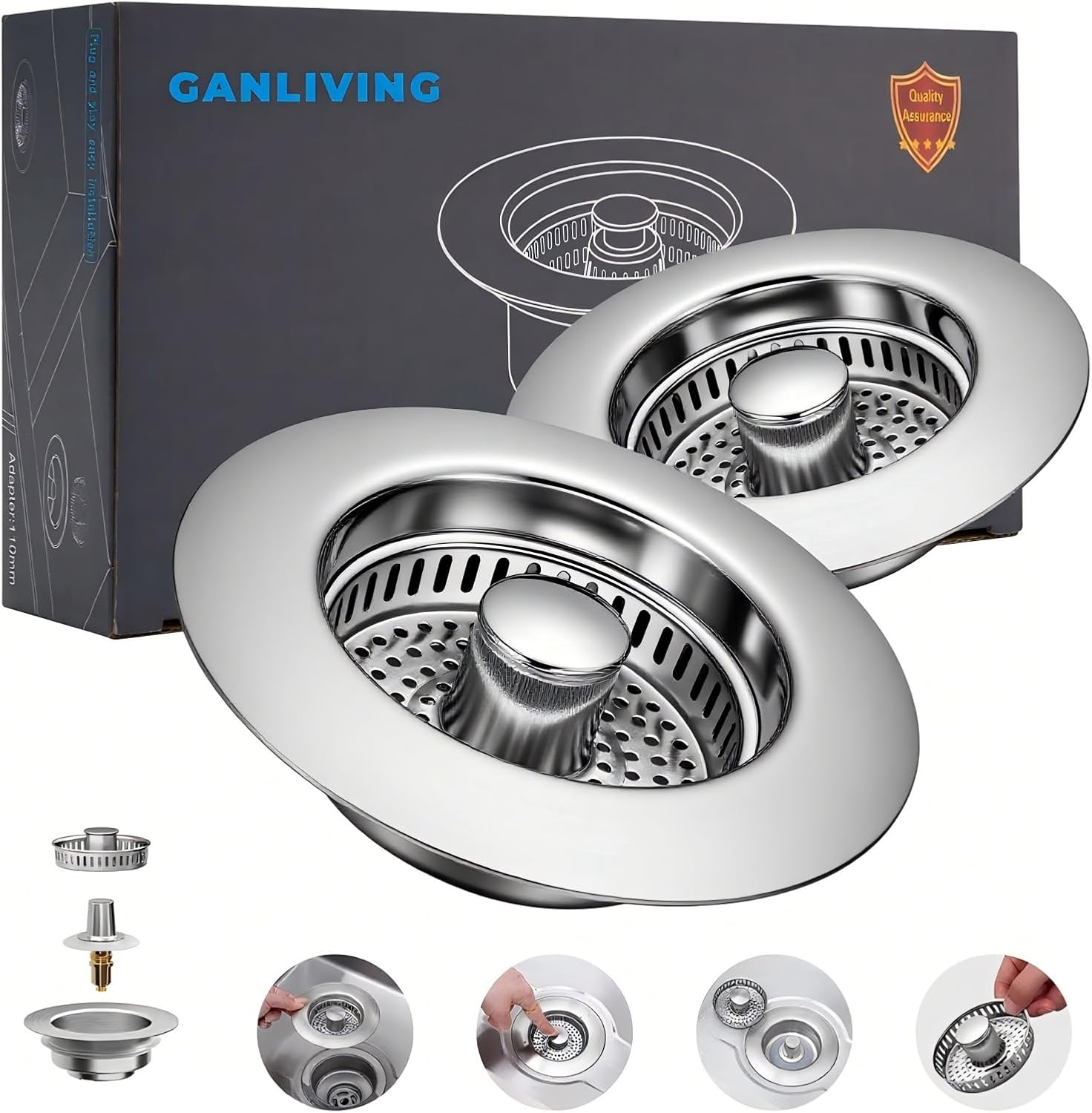
A sink strainer is a part that gets replaced rarely enough that nobody remembers how it works, and the fitting question causes more hesitation than it deserves. In practice the US kitchen sink drain is close to standardised, and checking whether yours matches takes a moment.
Three and a half inches is the standard
The overwhelming majority of kitchen sinks sold in the United States use a 3.5 inch drain opening. That is why replacement strainers are almost all made to that size.
Bathroom basins are different and considerably smaller, so a kitchen strainer will not fit a bathroom sink and vice versa.
Measure across the opening, not the fitting
Measure the diameter of the hole in the sink itself, across its widest point. That is the dimension the strainer body has to pass through and seat against.
If you measure an existing strainer instead, measure the flange that sits on the sink surface rather than the basket, which is smaller.
Basket strainers, stoppers and combinations do different jobs
A basket strainer catches food and sits permanently in the drain. A stopper seals the drain to fill the sink. Three-in-one designs do both by turning or lifting a central element.
The combination units are the most convenient, and they have a moving part, which is the thing that eventually wears.
Removing the old one is usually the hardest part
Old strainers seize with mineral deposit and old sealant. Soaking the area in vinegar for a while softens the deposit considerably and often turns a stuck fitting into an easy one.
Avoid levering against the sink surface itself, particularly on a coated or composite sink, where the finish chips easily.
Clean the seat before fitting the new one
The new strainer seals against the sink surface around the opening. Any old sealant, grit or scale left there produces a slow leak that appears days later under the cupboard.
Cleaning that ring properly is the step that determines whether the fitting is watertight.
Composite and steel sinks want slightly different care
Stainless tolerates a firm fit. Composite and enamel are more brittle at the edge of the opening and can chip if a fitting is overtightened.
Tighten until it seats and stops moving, then stop. Extra force does not improve the seal and does risk the sink.
Strainers we stock
The strainers and stoppers here are made for the standard 3.5 inch kitchen drain, in both basket and three-in-one designs. On our own shelf that range currently runs from $29.99 for the Ganliving 3-in-1 Kitchen Sink Drain Stopper & Strainer, 3.5 Inch, 2-Pack up to $29.99 for the Ganliving 3-in-1 Kitchen Sink Drain Stopper & Strainer, 3.5 Inch, 2-Pack.
These belong to Sink Drains, a group of 1 product as it stands. What is listed is what is charged; delivery is shown on its own line, not folded in later.
Related reading
Two other pieces on this site cover ground next to this one. A sponge that smells has been sitting in water. Everything else is a detail. And on a related note, in a small kitchen the counter beside the sink is the most contested surface in the house.
- Keeping a sponge from going sour in a wet sink
- Small kitchen counters: keeping the sink surround usable
Tools and preparation
Most of the difficulty is undoing an old fitting seized with mineral deposit. Soaking the area with vinegar for half an hour beforehand softens the deposit and turns a stubborn job into a straightforward one.
A pair of pliers with something soft between the jaws and the fitting protects the finish. Working directly on a chrome or coated part with bare metal jaws marks it permanently, which shows once the new part is in.
Checking for leaks properly
Fill the sink completely rather than running the tap. A slow leak at a strainer seat often only appears under the pressure of standing water, and a running tap does not produce that.
Leave it full for ten minutes and check underneath with a dry hand or paper. A drip that develops after several minutes is the one that would otherwise be discovered weeks later as a damaged cupboard base.
Knowing when to call somebody
A strainer that will not seal after the seat has been cleaned and the fitting replaced usually means the sink opening itself is damaged or out of round, which is beyond what a new part can fix.
The same applies if the waste pipe below moves when you tighten the fitting. Movement there means the connection underneath is loose, and tightening from above will not correct it and can make a small leak into a larger one.
Before ordering
Measure across the sink opening, decide whether you want a strainer, a stopper or both in one, and plan to clean the seat before fitting. With a standard opening the whole job takes a few minutes.
We ship out of Los Angeles, CA for $5.50, or free above $45, and take unused returns for 30 days. [email protected] if you want to check something first.