Keeping a sponge from going sour in a wet sink

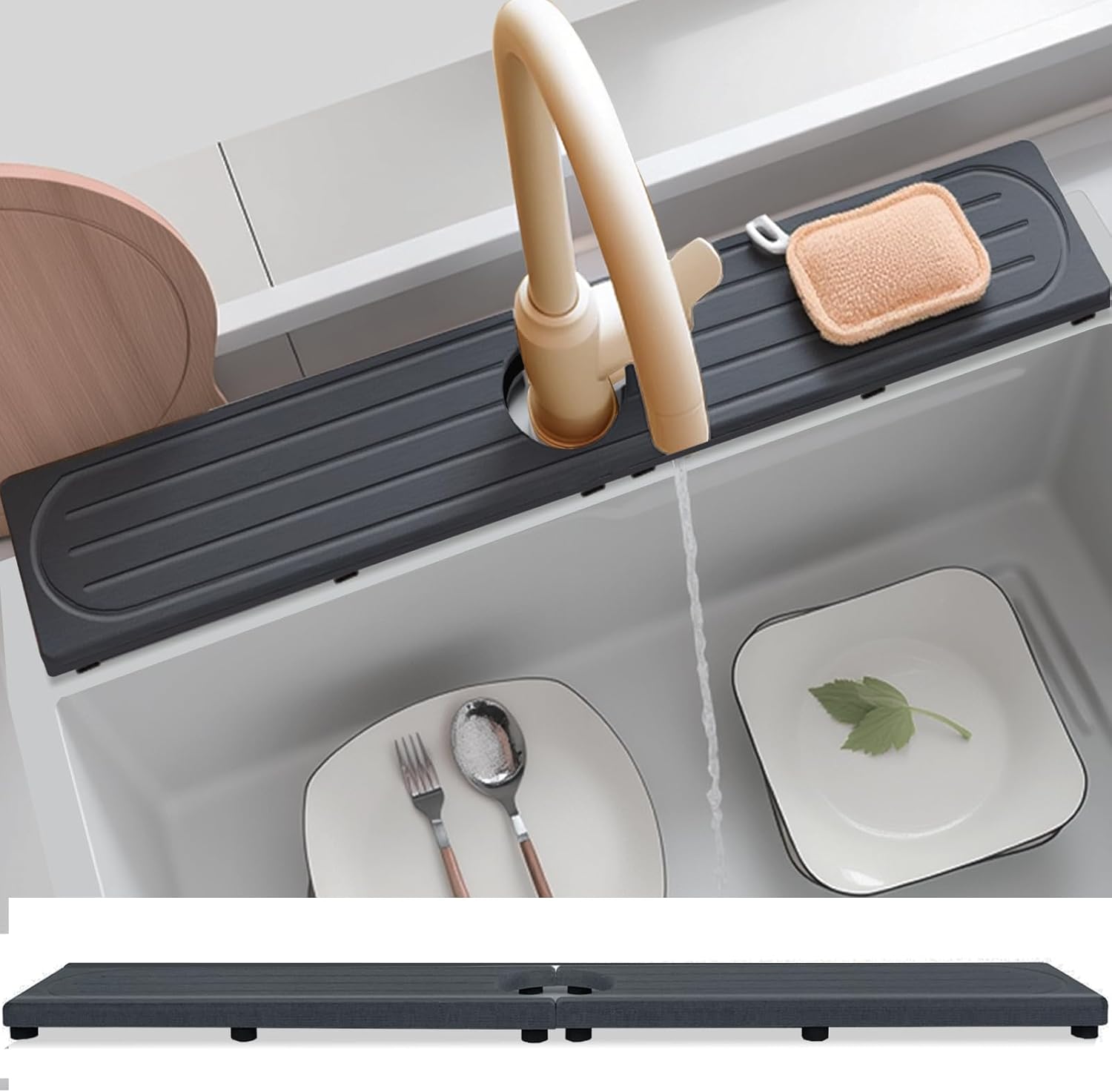
The sour smell that develops around a kitchen sink comes from one place more often than any other, and it is the sponge. The cause is straightforward and so is the fix, but it depends far more on where the sponge lives between uses than on how it is cleaned.
Sustained damp is the whole cause
Bacteria need moisture, warmth and food. A kitchen sponge supplies all three continuously if it never dries out, and that is when it starts to smell.
Remove the sustained damp and the problem largely disappears, even without changing anything else about how you clean.
The basin is the worst place to keep it
A sponge left in the sink sits in whatever drains past it and stays wet indefinitely, especially in a corner where water collects.
Anywhere that lifts it clear of standing water is an improvement, however simple.
Holders that expose more surface dry faster
A sponge in a solid cup dries from one face only. One held on edge in an open rack, or clipped so air reaches both sides, dries several times faster.
That difference in drying time is essentially the difference between a sponge that smells by Thursday and one that does not.
Wring it out properly first
A sponge left saturated has far more water to lose, and even a good holder will not dry it quickly. Squeezing it firmly before it goes back removes most of the water in a second.
This is the habit that makes the biggest difference and the one most often skipped.
Suction holders need a surface they can actually hold
A holder that falls into the sink every few days ends up unused. Suction needs smooth, clean, dry, non-porous surfaces, and a sink surround is often none of those.
Over-the-divider, adhesive-mounted or free-standing designs are more reliable on textured or composite sinks.
Clean the holder too
A holder that collects drips accumulates residue of its own, and then it becomes the source of the smell instead of the sponge.
Through the dishwasher weekly, or a rinse and wipe, keeps it from becoming the problem.
Holders on this shelf
The sponge holders here are the self-draining and open designs, in suction, adhesive and free-standing versions to suit different sink surrounds. On our own shelf that range currently runs from $6.29 for the 2 Pack Hilltop Products Kitchen Sink Strainer & Stopper for 3.5-inch Drains up to $14.99 for the Lyxel Fast Drying Diatomite Stone Faucet Mat for Kitchen Sink, Dark Gray 20" x 4".
These belong to Sink Accessories, a group of 7 products as it stands. What is listed is what is charged; delivery is shown on its own line, not folded in later.
- 2 Pack Hilltop Products Kitchen Sink Strainer & Stopper for 3.5-inch Drains — $6.29
- Inkhut Upgraded 3-in-1 Stainless Steel Kitchen Sink Drain Strainer, Silver — $9.99
- KESOL Rustproof 3-in-1 Stainless Steel Sink Caddy for Sponges, Brush & Cloth — $9.99
- BFONS Silicone Faucet Drip Catcher & Organizer Tray for Kitchen Sink, Grey — $9.99
- POWERSIR Upgraded 3-in-1 Kitchen Sink Drain Strainer Stopper, Brushed SUS 304 Stainless Steel, 1 Pack — $11.99
- Lyxel Fast Drying Diatomite Stone Faucet Mat for Kitchen Sink, Dark Gray 20" x 4" — $14.99
Related reading
Two other pieces on this site cover ground next to this one. In a small kitchen the counter beside the sink is the most contested surface in the house. And on a related note, nearly every complaint about a holder falling down is a mismatch between the mount and the surface.
- Small kitchen counters: keeping the sink surround usable
- Suction, adhesive or free-standing: choosing a mount that holds
The mistakes that keep a sponge wet
Leaving it in the bottom of the basin is the main one, and it is the default because that is where it was last used. Anywhere with drainage is an improvement over the place it naturally ends up.
Storing it in a closed container is worse rather than better. A lidded holder keeps water in and air out, which is precisely the condition that produces the smell people are trying to avoid.
Rotating sponges through a cycle
Having two or three in rotation means each one gets a full day to dry between uses, which is far more effective than any single storage solution.
It also makes replacement obvious: when one comes out of the cycle because it smells, there is already a replacement in service. Running a single sponge is what leads to keeping it past the point it should have been binned.
Where the smell comes from if it is not the sponge
If a new sponge smells within a day, the source is usually the drain rather than the sponge. Residue builds in the strainer and the top of the waste pipe, and a sponge sitting nearby picks the odour up.
Clearing the strainer and flushing the drain with very hot water and bicarbonate addresses it. Replacing sponge after sponge without checking the drain is a common and frustrating way to chase the wrong problem.
The arrangement that works
Wring the sponge out, store it on edge in an open holder clear of standing water, mount the holder somewhere it will actually stay, and clean the holder weekly. That combination stops the smell without any special product.
We ship out of Los Angeles, CA for $5.50, or free above $45, and take unused returns for 30 days. [email protected] if you want to check something first.