Suction, adhesive or free-standing: choosing a mount that holds

Sink and wall accessories come with one of three mounting methods, and each has clear requirements. Almost every failure is a mount used on a surface it was never going to hold on, which is easy to avoid once you know what each one needs.
Suction: smooth, non-porous, clean and dry
A suction cup works by excluding air between the cup and the surface. That requires a surface with no texture and no absorbency — glazed tile, glass, some steel and acrylic.
Textured tile, natural stone, grout lines, painted plaster and composite sinks all fail one of those requirements, and the cup will release, usually slowly and unpredictably.
Preparation decides whether suction works
Kitchens and bathrooms coat every surface with a fine soap and grease film that prevents a proper seal. Most suction failures are actually this rather than the product.
Clean the exact spot with alcohol, let it dry completely, then mount and lock. That step converts unreliable into reliable.
Adhesive: stronger, tolerant of texture, harder to remove
Modern adhesive pads hold considerably more weight than suction and work on surfaces suction cannot. The cost is that removal can take finish with it.
For a rental, test on an inconspicuous area first and prefer stretch-release adhesive, which is designed to come off cleanly.
Free-standing: no surface requirement at all
A caddy that simply sits on the counter or hangs over the sink divider has no mounting requirements whatsoever, which makes it the reliable default.
It occupies counter space, which is the trade. In a small kitchen that may be the deciding factor, and in a rental it often is not.
Weight belongs low
Whatever the method, heavy items high up put the most load on the weakest point. Bottles and full dispensers are better on a counter or a sink-mounted caddy than on a wall hook.
Reserve wall mounting for cloths, brushes and light items and mount failures become inconvenient rather than expensive.
Check the temperature the mount will see
Adhesive near a hob or a steam outlet softens over time, and suction expands and contracts with heat, which breaks the seal.
A spot that gets hot or steamy repeatedly wants a mechanical or free-standing solution rather than either of the stick-on methods.
Mounting methods here
Every holder on this shelf states how it mounts, because that is the fact that decides whether it will work on your particular sink. On our own shelf that range currently runs from $6.29 for the 2 Pack Hilltop Products Kitchen Sink Strainer & Stopper for 3.5-inch Drains up to $14.99 for the Lyxel Fast Drying Diatomite Stone Faucet Mat for Kitchen Sink, Dark Gray 20" x 4".
These belong to Sink Accessories, a group of 7 products as it stands. What is listed is what is charged; delivery is shown on its own line, not folded in later.
- 2 Pack Hilltop Products Kitchen Sink Strainer & Stopper for 3.5-inch Drains — $6.29
- Inkhut Upgraded 3-in-1 Stainless Steel Kitchen Sink Drain Strainer, Silver — $9.99
- KESOL Rustproof 3-in-1 Stainless Steel Sink Caddy for Sponges, Brush & Cloth — $9.99
- BFONS Silicone Faucet Drip Catcher & Organizer Tray for Kitchen Sink, Grey — $9.99
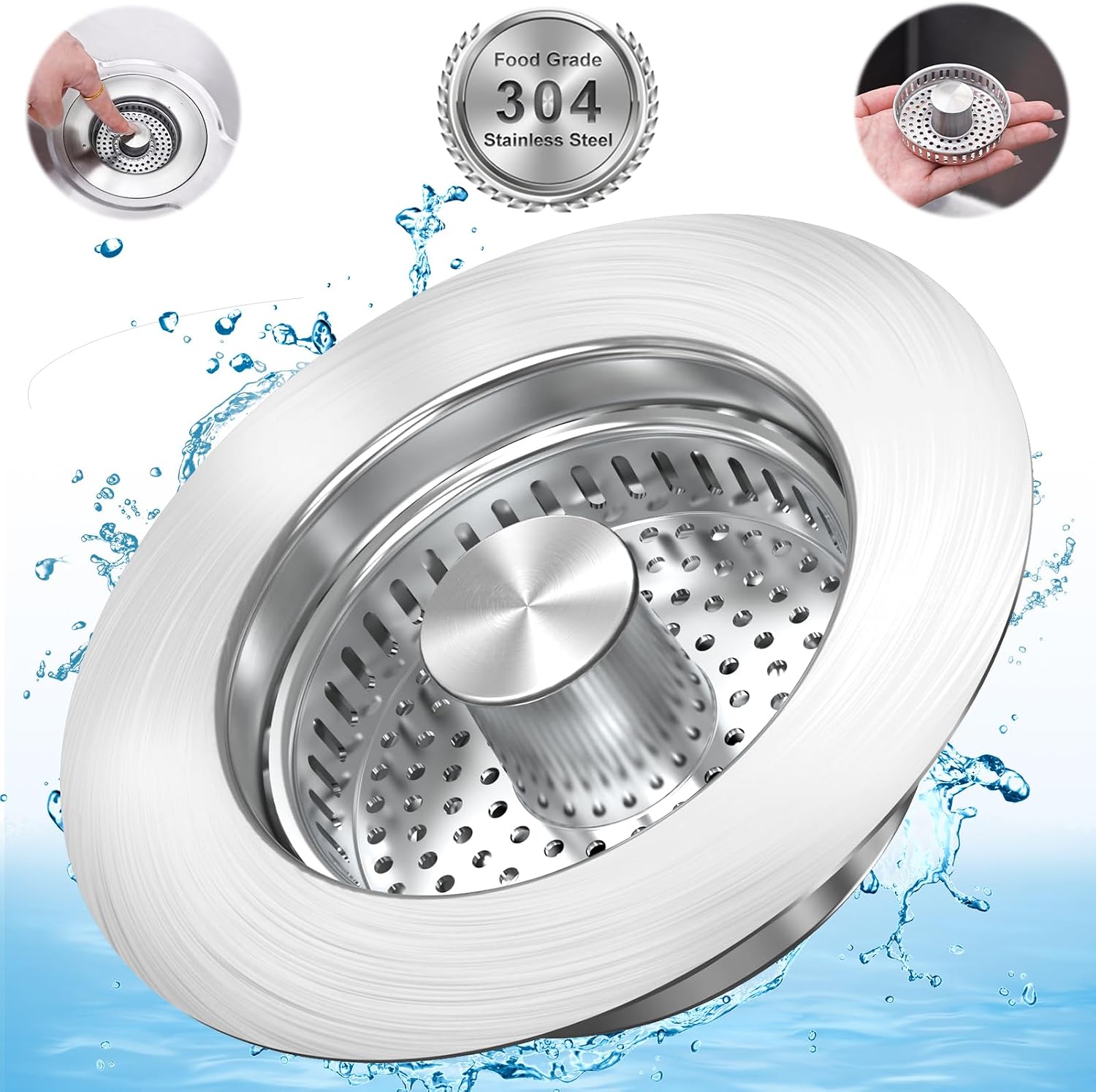
- POWERSIR Upgraded 3-in-1 Kitchen Sink Drain Strainer Stopper, Brushed SUS 304 Stainless Steel, 1 Pack — $11.99
- Lyxel Fast Drying Diatomite Stone Faucet Mat for Kitchen Sink, Dark Gray 20" x 4" — $14.99
Related reading
Two other pieces on this site cover ground next to this one. A stone mat does not hold water the way a cloth does — it moves it, which is why it does not go sour. And on a related note, stainless steel resists rust rather than being immune to it, and a caddy sitting in water is the hardest test you can give it.
- Diatomite drying mats: what they do and how to look after one
- Why sink caddies rust, and how to choose one that will not
Installing adhesive so it actually bonds
Adhesive needs a clean, dry surface and then time. Most pads reach full strength after a day, and loading one immediately after fitting is the single most common cause of an early failure.
Temperature matters at installation too. Adhesive applied to a cold surface bonds poorly, so a bathroom tile in winter is worth warming slightly and drying thoroughly before the pad goes on.
Removing mounts without damage
Stretch-release adhesive comes away cleanly if pulled slowly and straight down along the wall rather than outward. Pulling outward is what takes paint and tile glaze with it.
For suction, breaking the seal at the edge with a fingernail rather than pulling the whole cup off avoids stressing the surface. Both take a few extra seconds and avoid the damage that makes landlords unhappy.
Matching mount to surface
Glazed tile, glass or steel, cleaned with alcohol: suction. Textured or composite surfaces: adhesive, tested somewhere hidden. Renting, or anywhere hot and steamy: free-standing. Get that match right and holders stop falling down.
We ship out of Los Angeles, CA for $5.50, or free above $45, and take unused returns for 30 days. [email protected] if you want to check something first.